
About this Design
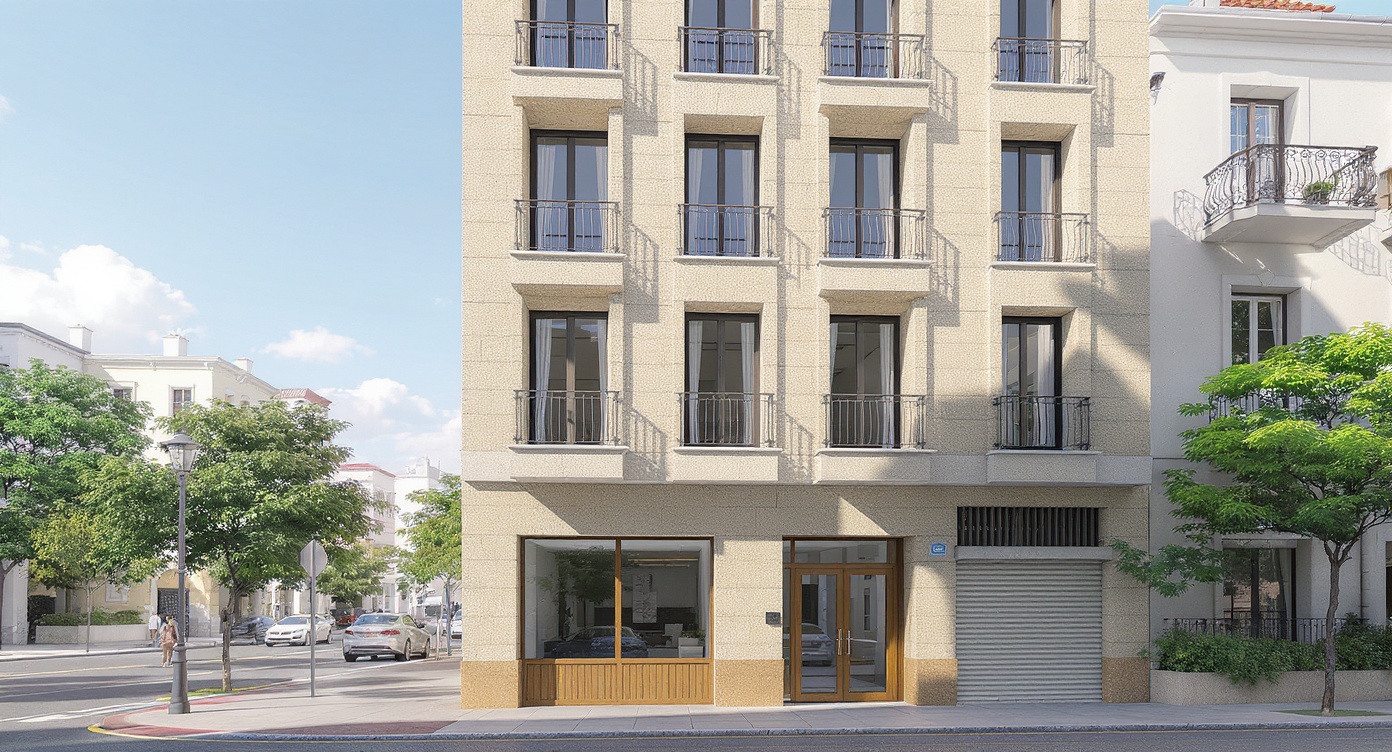
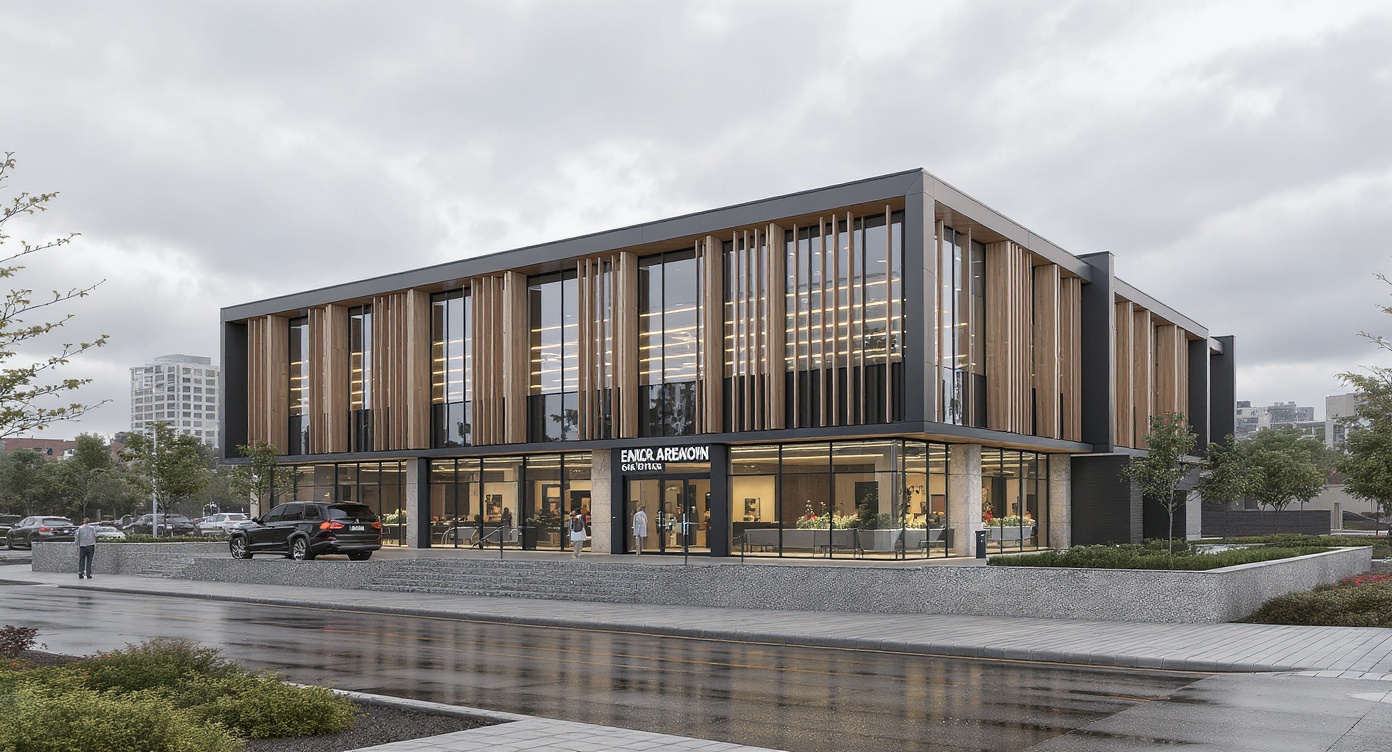
The façade reads as a disciplined study in material contrast and tectonic rhythm. A three-storey stacking is articulated through deep vertical bays of textured beige stone set against lighter travertine panels; the resulting subtle chromatic shift keeps the elevation from feeling monolithic while preserving a restrained palette. Each floor’s tall, dark-framed windows are vertically proportioned to emphasize the building’s narrowness and to admit abundant daylight; the frames’ deep charcoal tone creates a crisp edge where glazing meets stone, and it anchors the composition against the lighter masonry.
Recessed balconies introduce shadowed pockets that modulate the strong noon sunlight. Horizontal stone bands define the balcony sills and create a datum line at each floor, their projecting geometry catching light on the upper edges and falling into cool shadow beneath. This interplay—bright sun on rough stone faces, soft gradations within the recesses—accentuates the material textures: the slightly pitted finish of the beige stone scatters specular highlights, while the travertine panels exhibit faint veining and a smoother, more reflective plane. The balcony balustrades are slender and minimally detailed, allowing cast shadows to form linear patterns across the stone, animating the façade without ornament.
At street level the composition shifts scale with a full-height glazing bay and a warm wooden entrance door. The wood’s vertical slats and honeyed tone provide tactile warmth against the cooler stone, and the full-height glass invites visual permeability while reflecting the bright city backplate beyond the façade edges. A single side door and a recessed rolling grille integrate service functions with minimal disruption. The decision to keep artificial lighting off underlines the noon shoot: sharp natural sunlight produces decisive highlights and soft daytime shadows, revealing the true albedo and texture of each material. The urban backplate visible at the margins situates the building within a broader streetscape—trees, lamp posts, and neighboring façades—so the render reads as an inhabited city elevation rather than an isolated study. The overall mood is composed and civic: material honesty, careful proportion, and daylight choreography together project quiet durability and urban tactility.