
About this Design
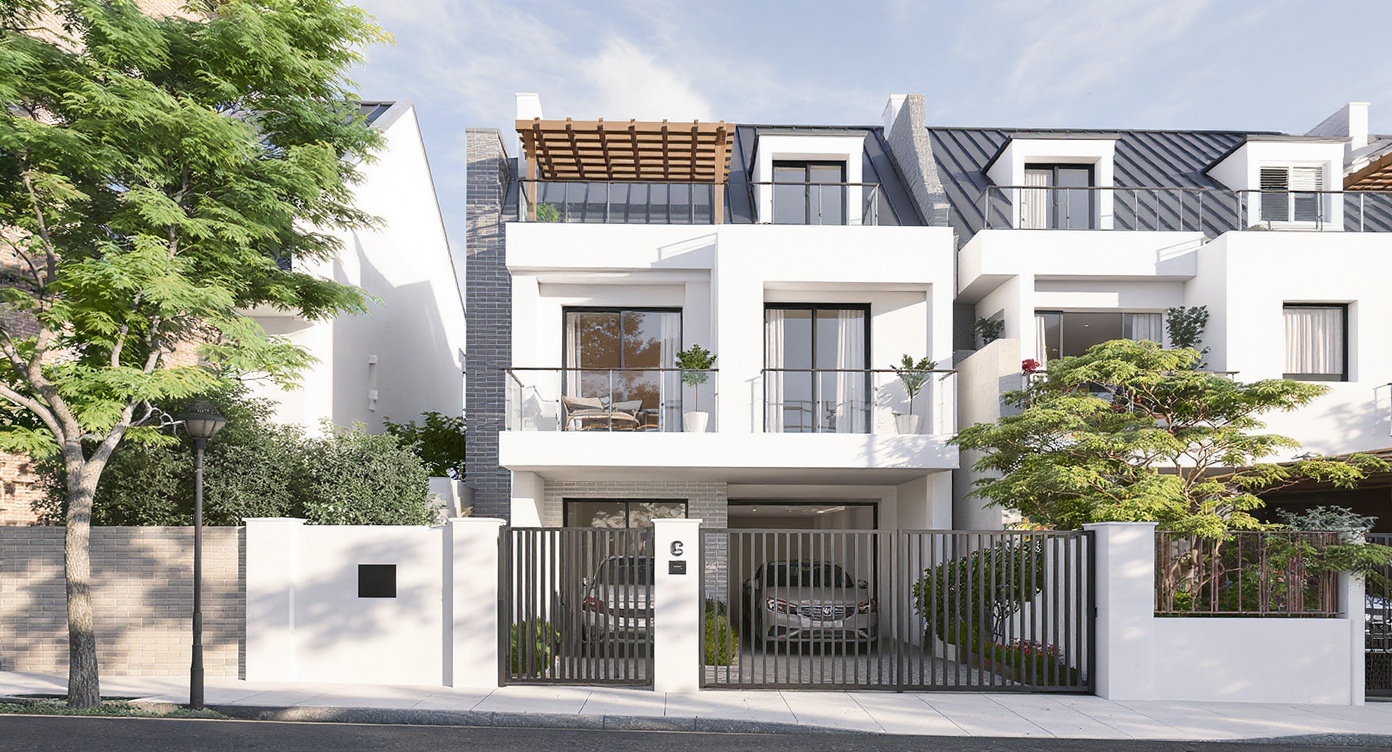
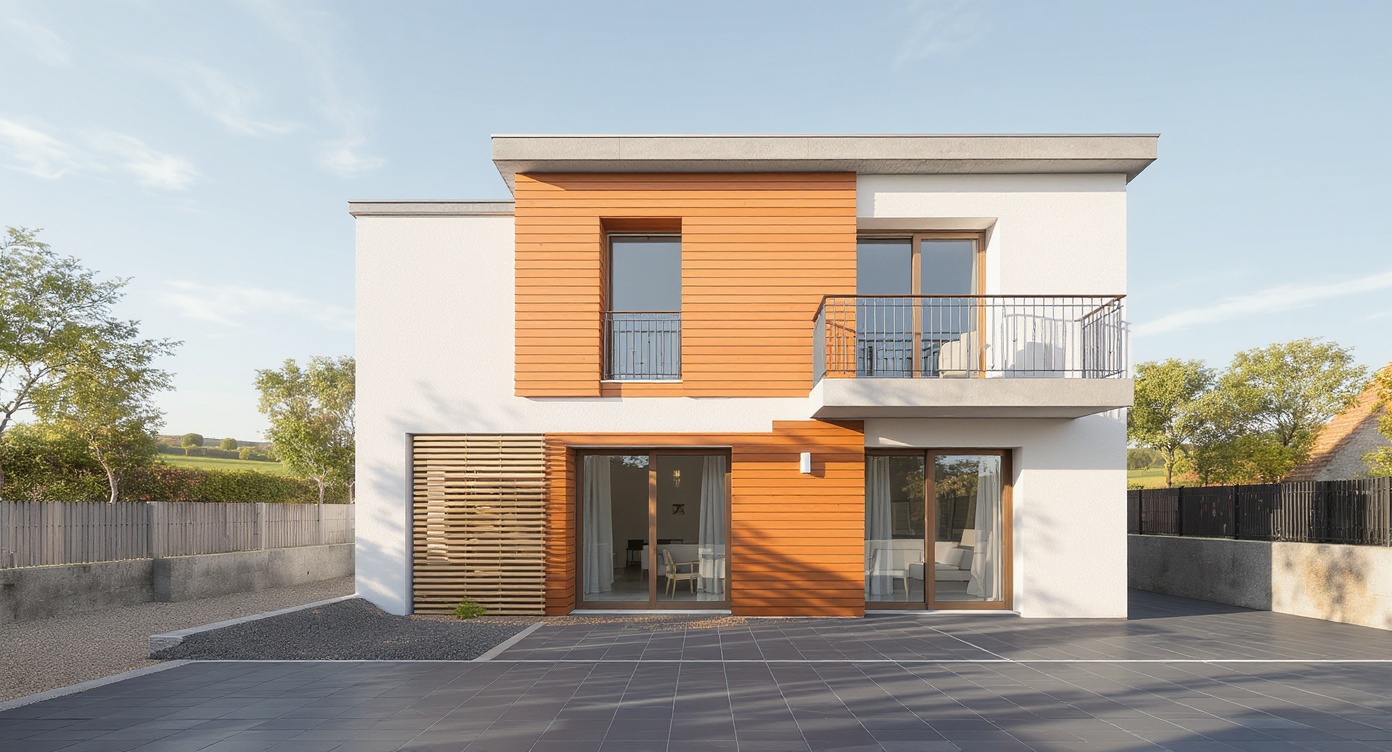
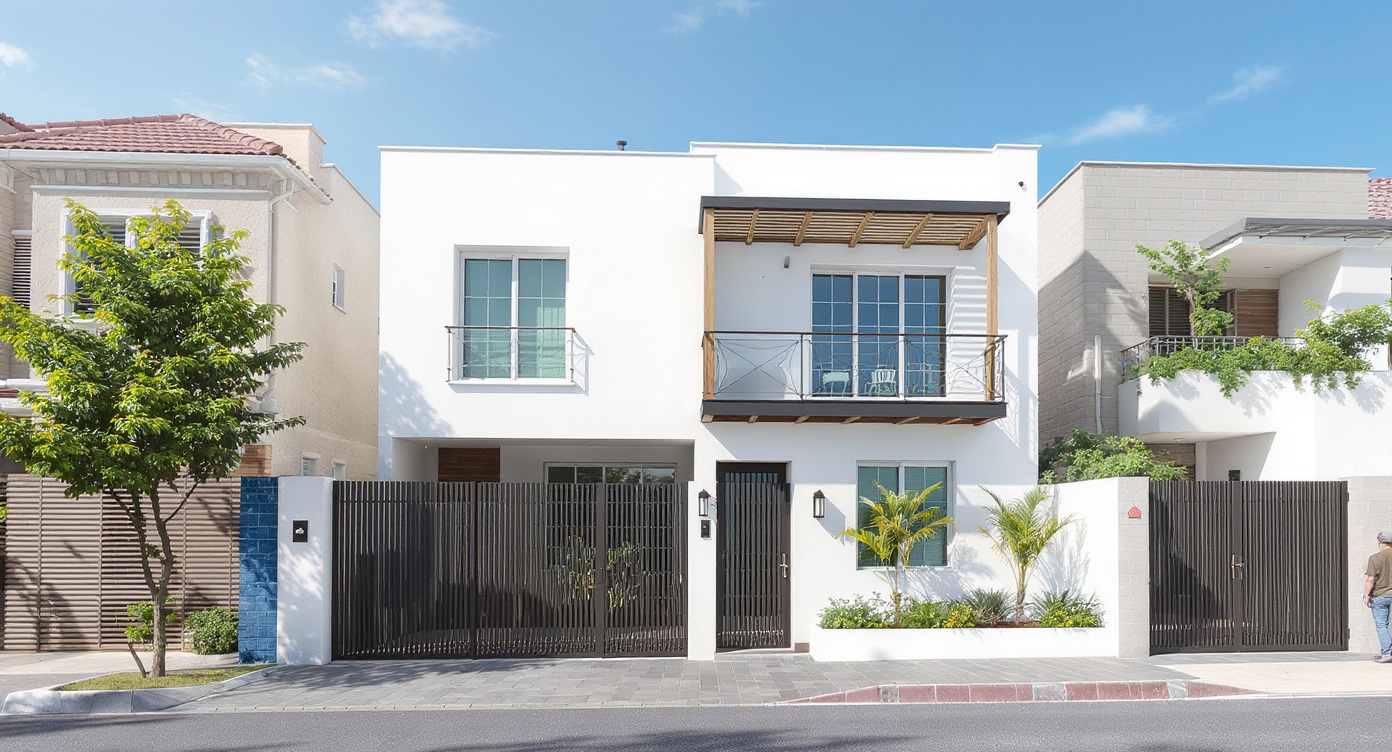
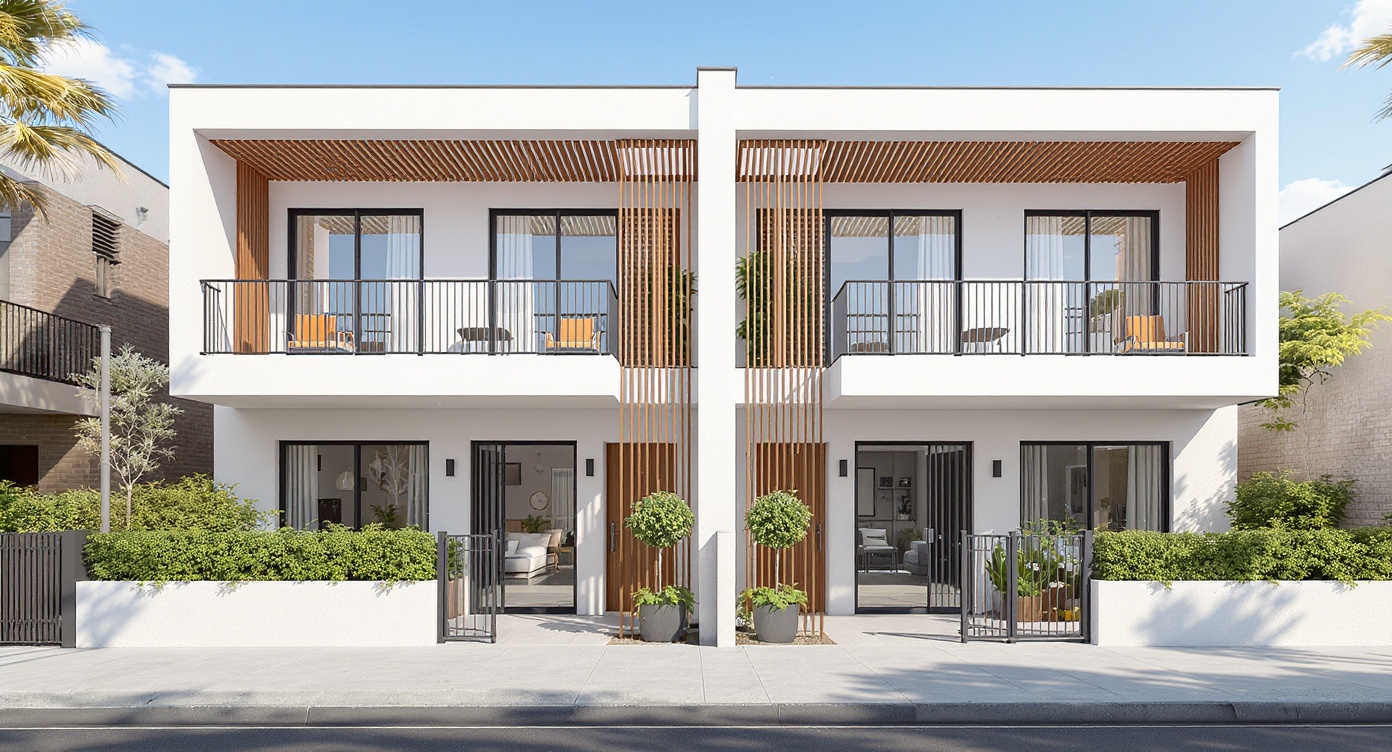
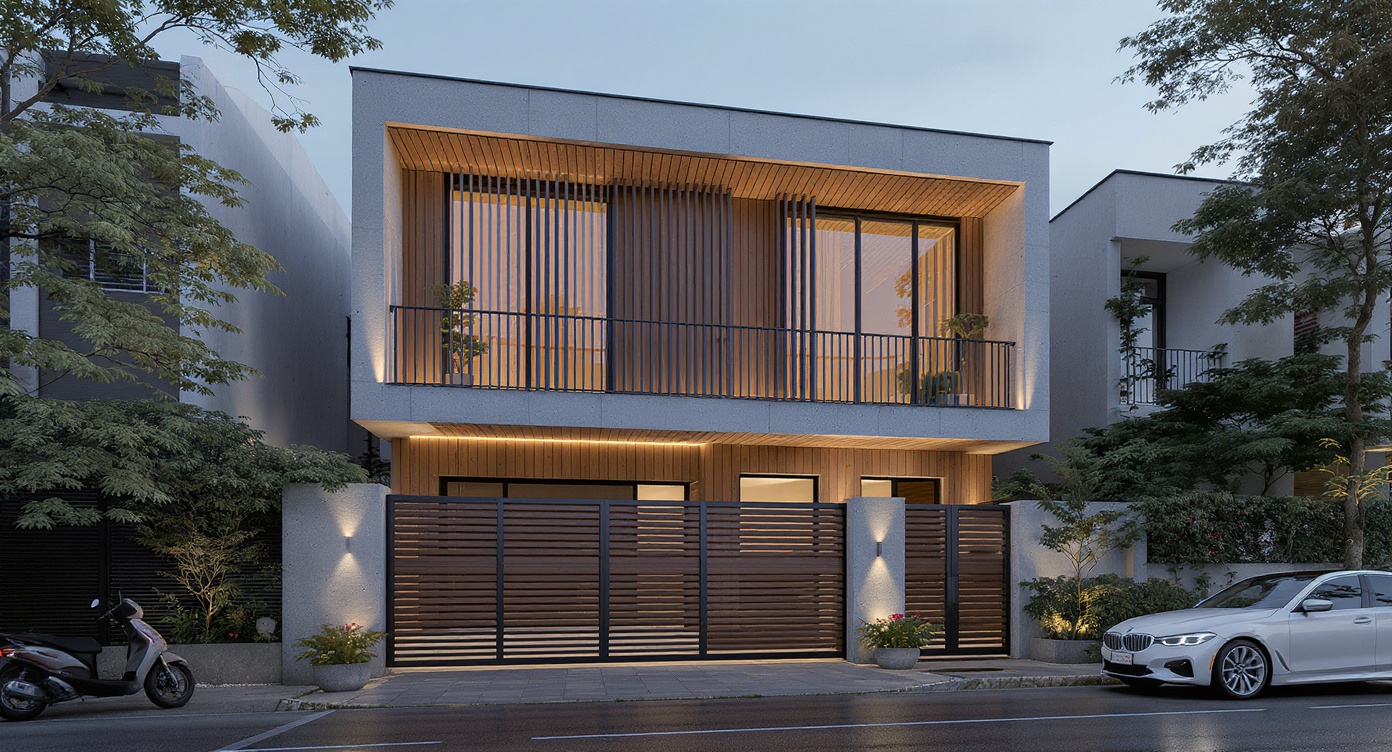
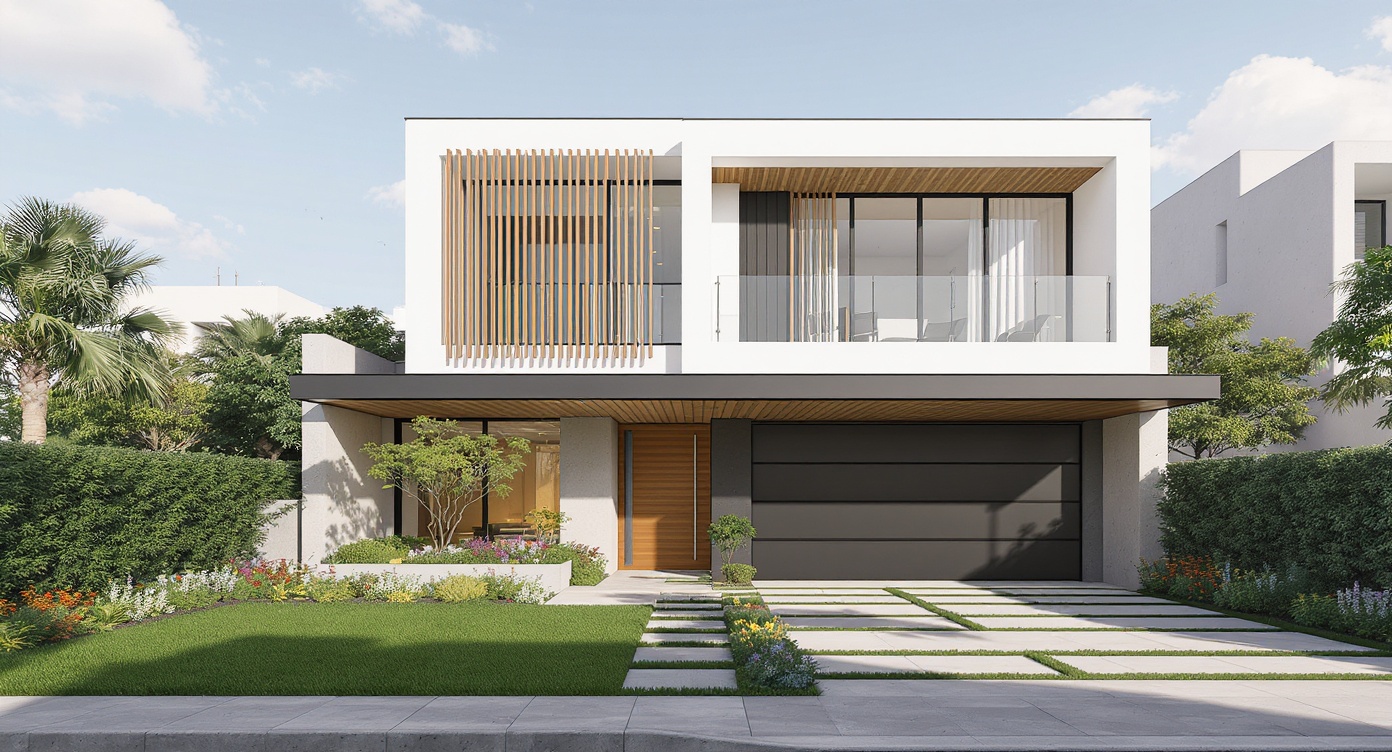
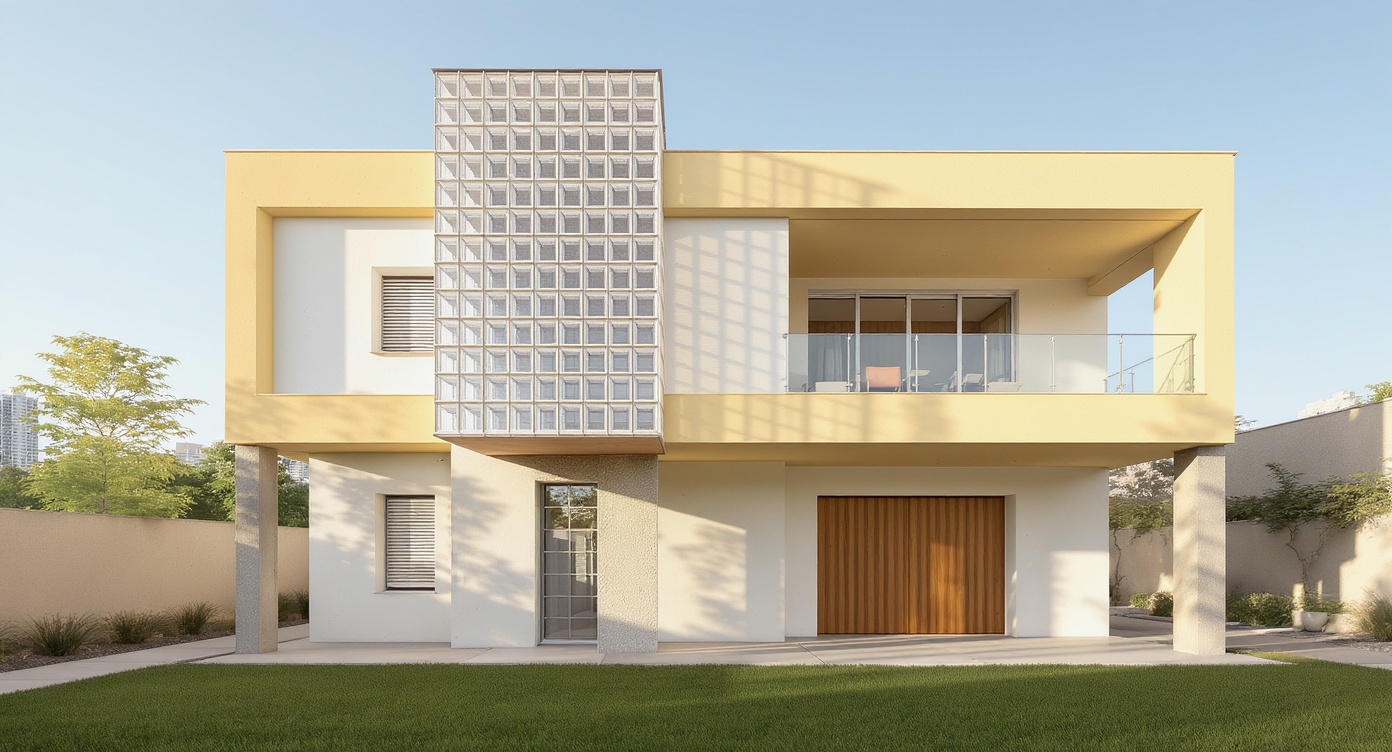
This brief prescribes a photoreal 3D render that preserves the sketch’s composition and backplate while translating architectural intent into material and lighting fidelity. The façade reads as disciplined modernism: smooth white plaster planes articulate stacked volumes, contrasted by a dark standing‑seam metal roof that caps the composition with a crisp silhouette. Large multi‑pane windows are expressed with fine black mullions to maintain the rhythm of the elevation and to allow interior reflections to respond to morning sky. The recessed entrance is set back behind vertical black metal slats; these slats are framed with warm, medium‑toned timber that introduces a tactile counterpoint to the plaster’s coolness and defines the human scale of the threshold.
Structurally, the design relies on rectilinear cantilevers and a clear hierarchy of load paths. The upper balcony projects slightly from the main volume, supported by concealed steel elements to preserve the clean soffit lines. The balcony’s glass balustrade should be specified as low‑iron laminated glass with minimal stainless steel fixings so sightlines remain uninterrupted; the wooden pergola above is a lightweight timber frame with 50–70 mm rafters spaced to allow summer dappled shade while admitting morning light. The ground‑level garage opening reads as a recessed bay with a subtle recessed lintel; brick or tile setbacks in the internal garage reveal provide a durable base and visual weight at the plinth.
Lighting and surface interaction are critical. Set the scene to clear morning daylight with a sun angle low enough to cast soft, elongated shadows that reveal texture on the plaster and emphasize the depth behind the vertical slats. Use a color temperature around 5000–5500 K and a slightly warm direct sunlight to enliven timber tones. Specular highlights on the dark metal roof should be soft and directional; keep reflections on glazing consistent with the street backplate—avoid artificial light sources entirely so interior spaces remain tonal and rely on transmitted daylight only. Small landscaping elements—potted plants on the balcony, a planted strip beside the garage, and the existing street tree at the left—should be modelled with high‑frequency foliage so dappled shadows animate the façade.
For materials and render settings: white plaster with subtle subsurface roughness (micro‑bump ~0.1–0.3), dark metal with anisotropic sheen and low microsurface roughness, timber with clear coat and visible grain direction, and matte black metal slats with 10–15% specularity. Glass: 2% tint, 0.5–1.0 roughness, 6–8 mm thickness, with proper IOR (~1.52). Render at high sample counts for clean soft shadows and enable global illumination with two‑bounce indirect light for realistic ambient fill. Deliver a 4K+ image with natural morning contrast and no artificial luminaires turned on.