
About this Design
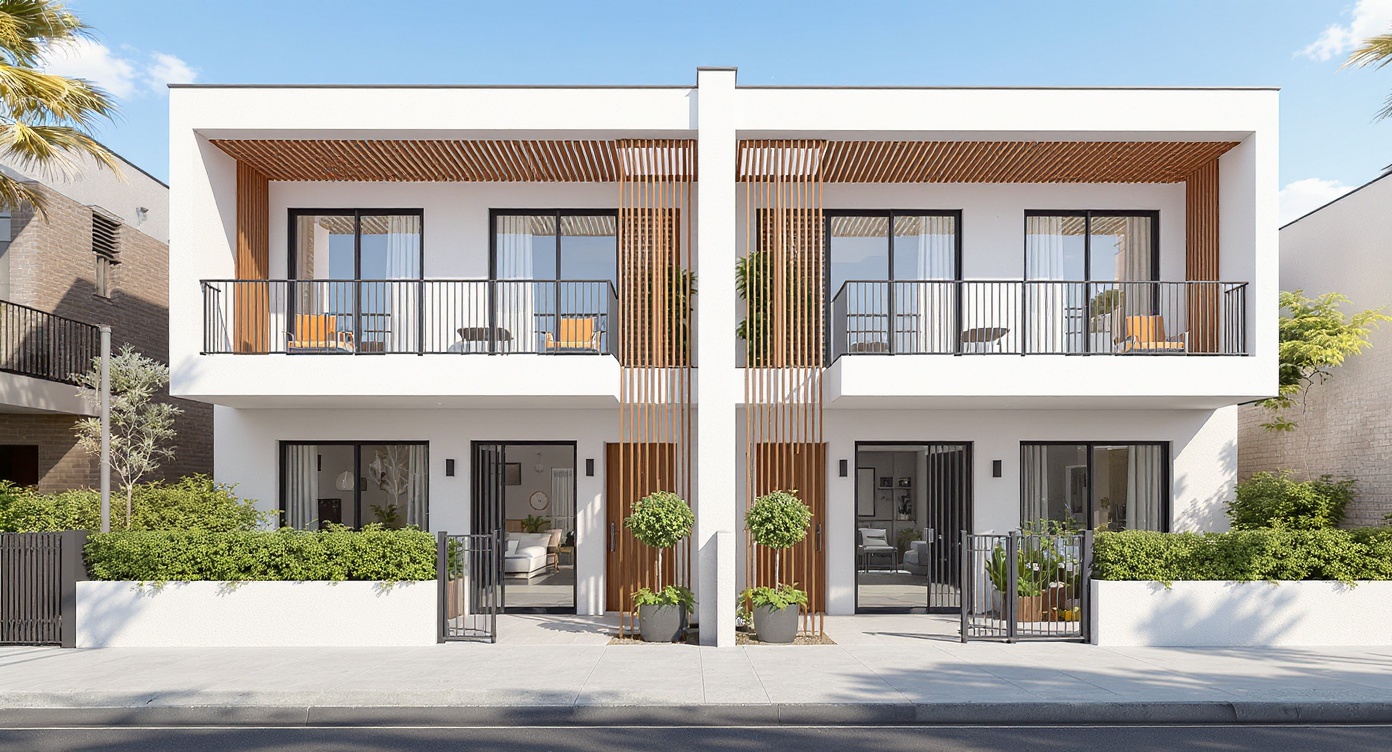
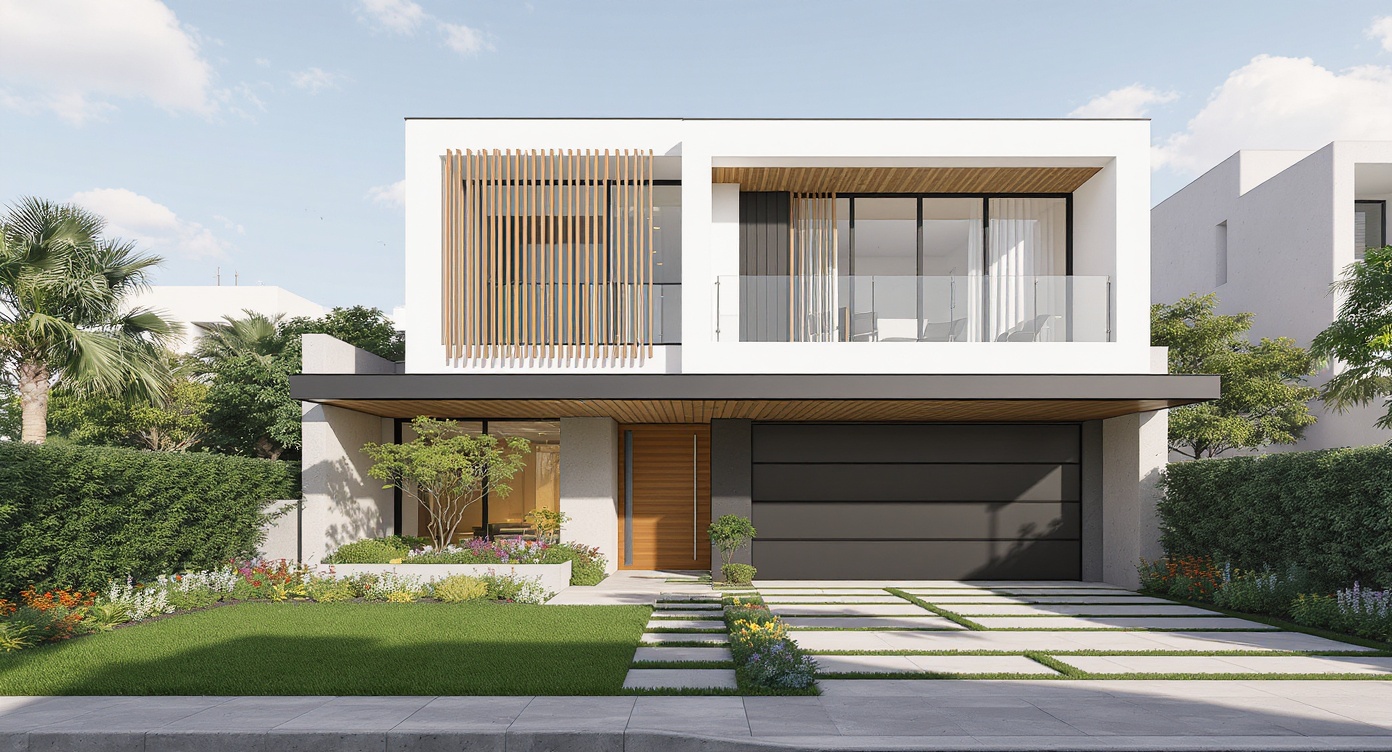
This frontal, slightly low-angle composition emphasizes the twin symmetry and vertical rhythm established by the timber slat screens that span both levels. Structurally the design reads as two identical volumes bisected by a slim central divider; that narrow pier performs both tectonic and aesthetic roles, anchoring the elevation and providing a vertical datum for the timber slats to cascade past the recessed entry recesses. The large rectilinear balconies are expressed as cantilevered white plaster boxes with crisp shadow lines to reinforce the geometric order.
Material choices are deliberate and material-honest. The matte white render allows mid-day light to graze the surface without specular distraction, so highlights remain soft while the edges retain sharp definition. Warm stained timber slats and balustrades introduce a tactile counterpoint: their grain and subtle chroma break the monochrome of the render while their verticality augments perceived height. Dark, textured metal frames around sliding doors and windows read as robust, resilient elements — their low reflectance keeps attention on the timber and plaster while providing crisp framing for the slightly reflective glazing. The glass shows measured depth: reflections of the clear sky and faint interior silhouettes maintain daylight fidelity without appearing artificially bright.
Daylight-only noon illumination creates crisp mid-day shadows that articulate the relief of the pergola roof overhangs and the recessed soffits above balconies. The glazed pergola casts delicate linear shadows onto the timber ceiling slats, producing a layered interplay of light and shadow that changes the facade’s perceived depth. The sidewalk and curb are plain concrete, textured enough to read in close view but neutral so the facade remains dominant. A low-rise urban backplate beyond the building provides contextual scale, softened by atmospheric perspective so it doesn’t compete with the foreground geometry.
Spatially, the recessed wood-paneled entry doors form intimate thresholds: the entries are sheltered, scaled to human proportions, and punctuated by potted greenery that softens the street edge. Upper-level timber balustrades, consistent with the slat system, offer continuity and a coherent material palette across both floors. The overall mood is restrained and composed — an urban residential elevation that balances material warmth with minimalist precision, where daylight choreography reveals texture, rhythm, and the subtle architecture of everyday moments.