


About this Design
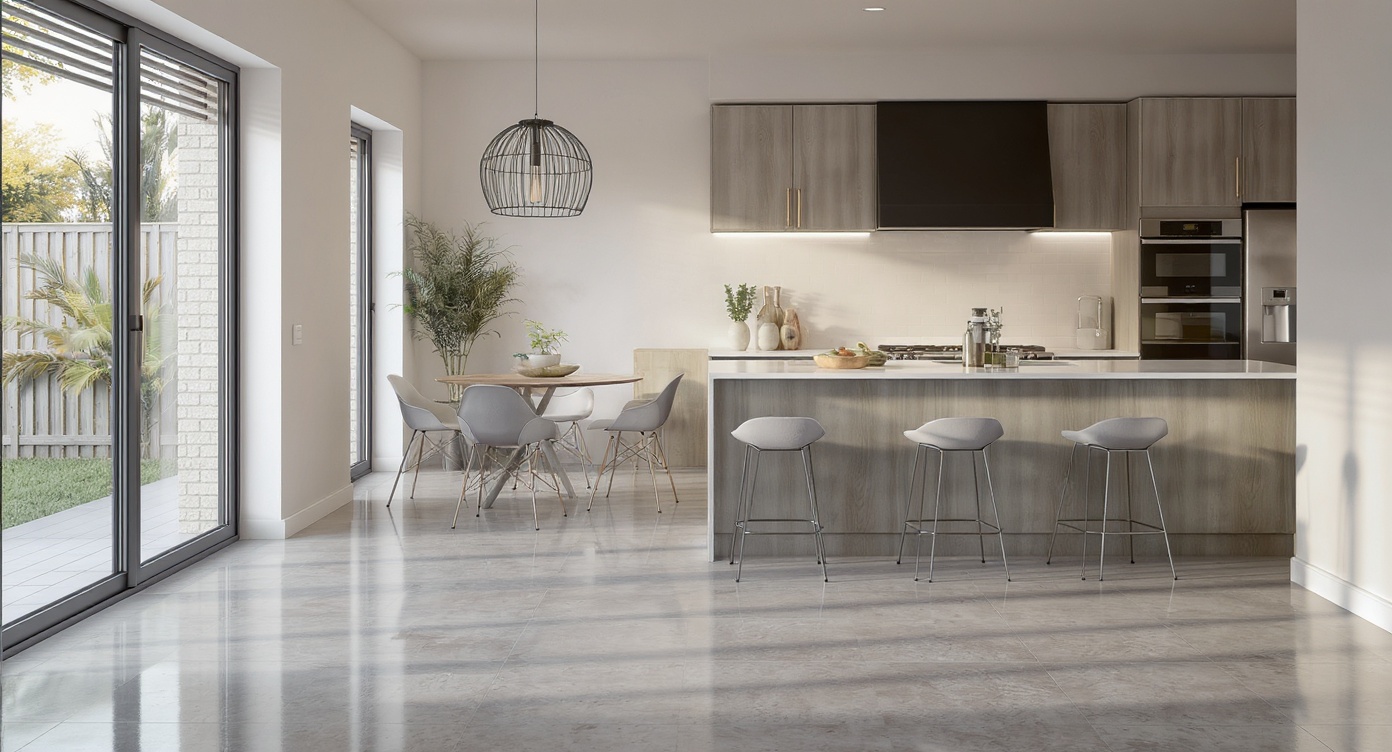
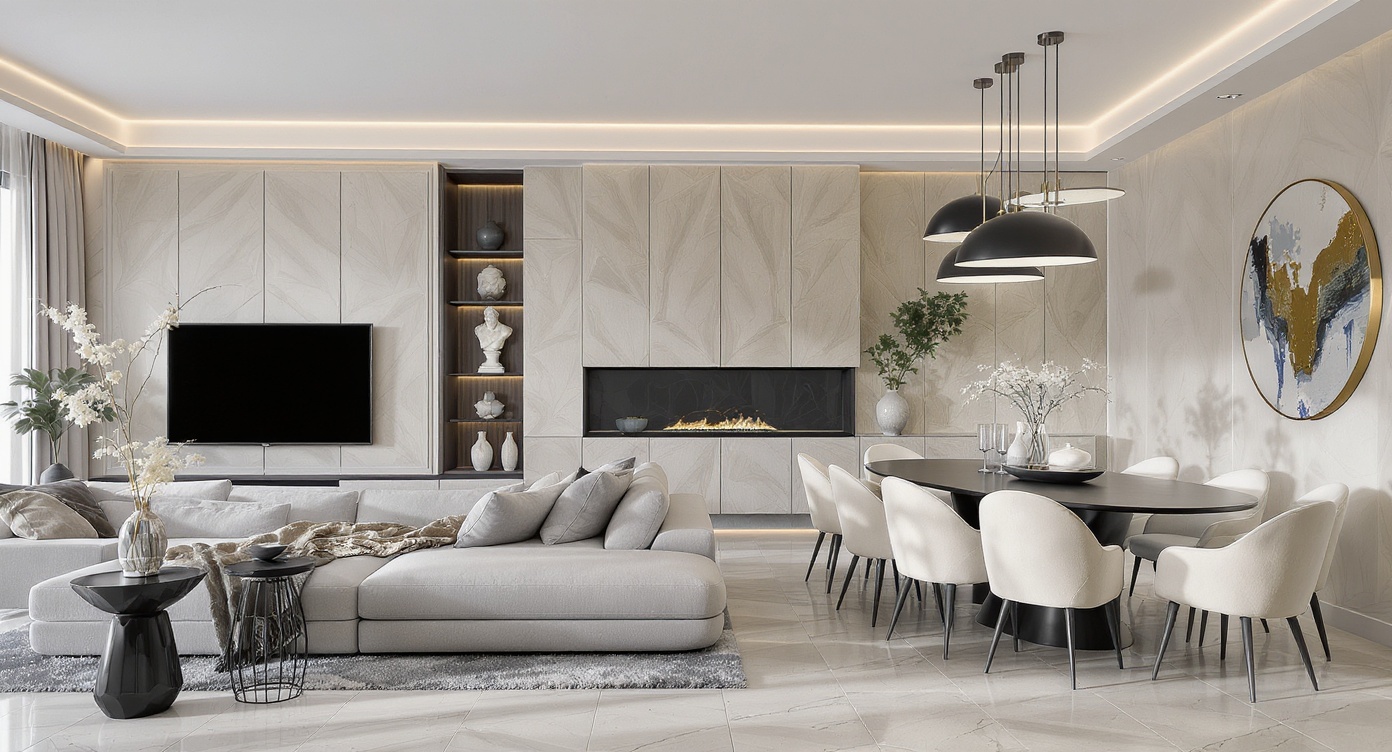
The updated scene substitutes the warm wood planks with a smooth, light gray polished concrete slab that runs uninterrupted across the visible kitchen and dining zones. The concrete finish is low-variance and micro-trowelled, producing a subtle mottle rather than uniform flatness; this preserves visual interest without competing with the cabinetry or furnishings. A high-gloss topical polish yields specular highlights that correspond to the existing daylight from the sliding doors and the under-cabinet task lighting, producing soft longitudinal reflections aligned with the floor planes.
Structurally, the concrete is rendered as large-format pours with hairline control joints that align discreetly with the room’s geometry, avoiding visual clutter. The transition at the baseboards is intentionally crisp: a narrow reveal ensures the baseboard sits slightly proud of the slab, preventing the illusion of a floating trim. Cabinet kick-rails retain their defined shadows because the material swap respects the original floor-to-cabinet clearance; shadow lengths and edge gradients match the established light angles, preserving the perceived depth between lower cabinetry and floor.
Material choice emphasizes honesty and restraint. The light gray tone reads neutral against the warm-grain cabinetry and stainless appliances, anchoring the room while enhancing the cool reflections from the glass doors. Polishing intensity is calibrated so that mid-level reflections—of the dining table legs, pendant cage, and bar stools—are crisp but not mirror-like, maintaining legibility of texture and softening skin-of-light where the outdoor brightness is strongest. Overall mood shifts toward a more contemporary, slightly industrial minimalism: the concrete’s tactile coolness contrasts the wood-vein cabinetry, tightening the composition and reinforcing the kitchen island as the spatial focal point.