
About this Design
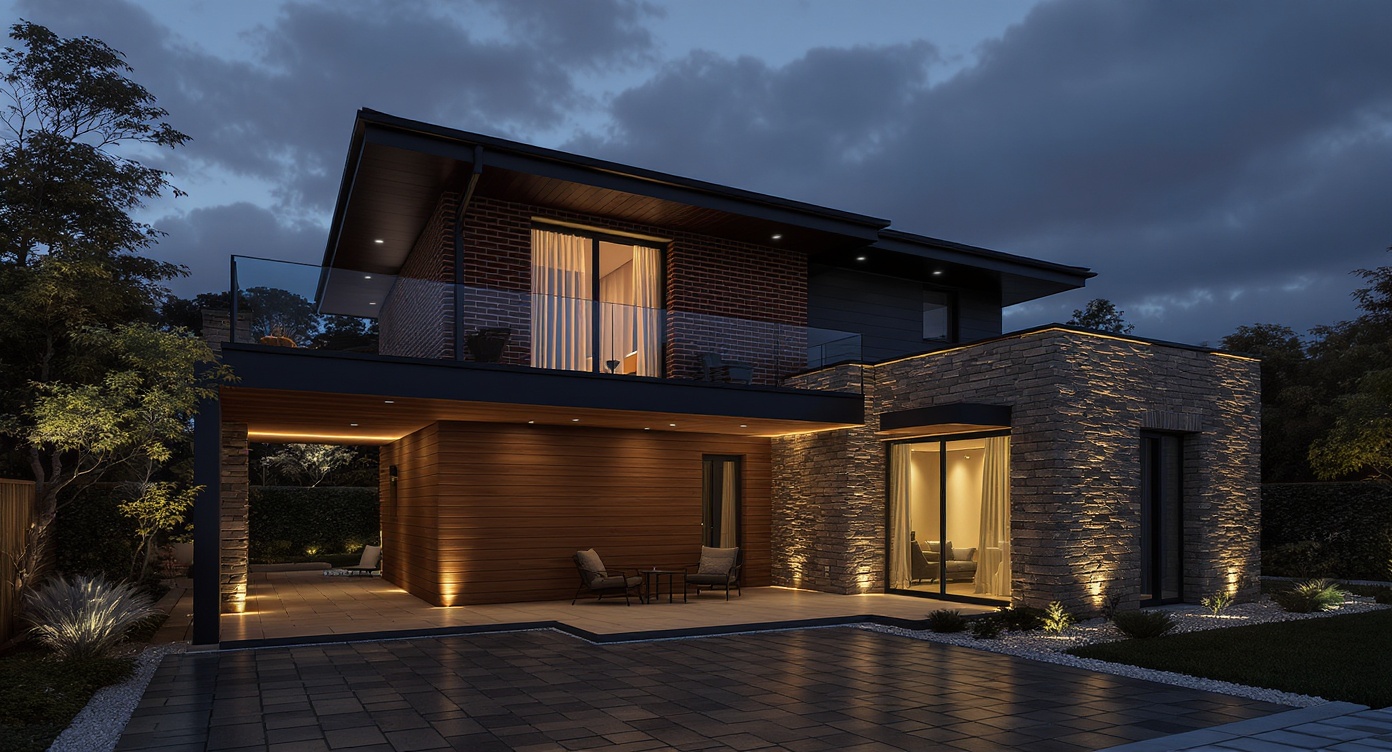
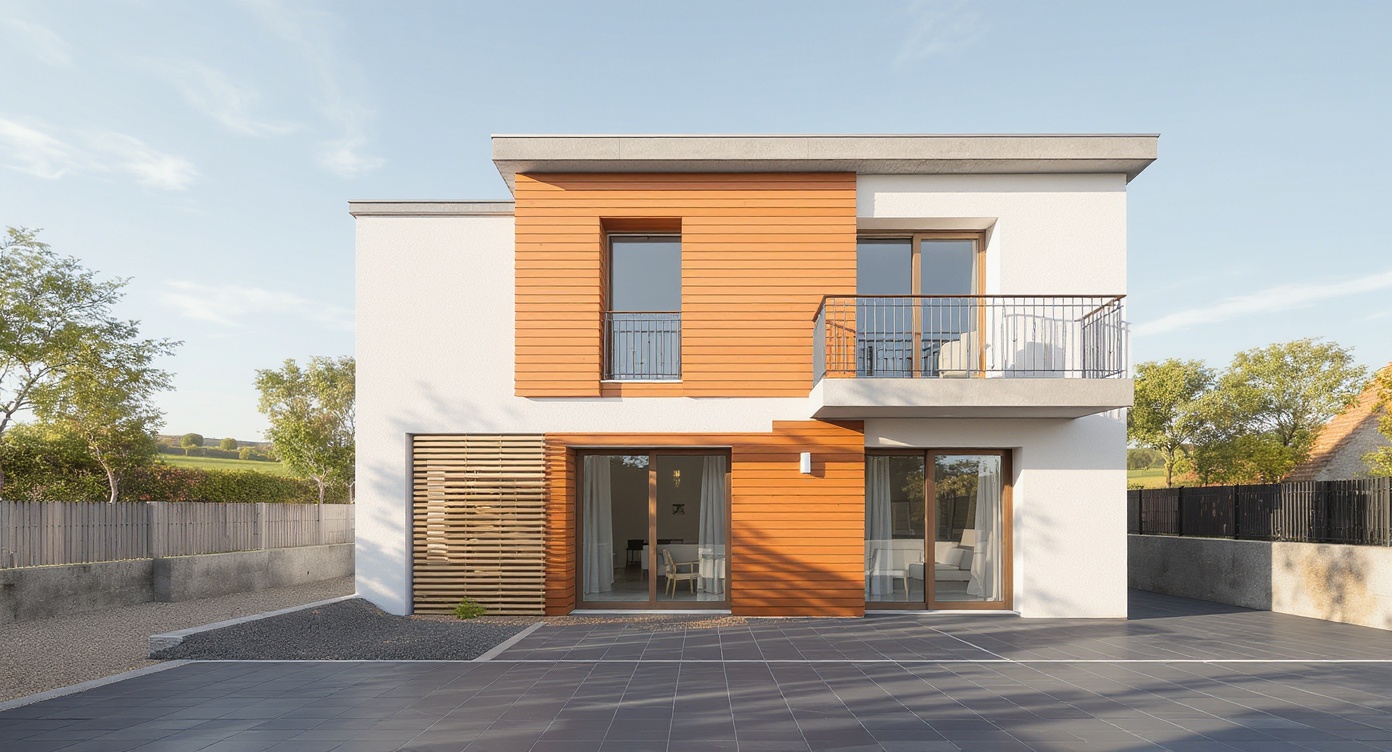
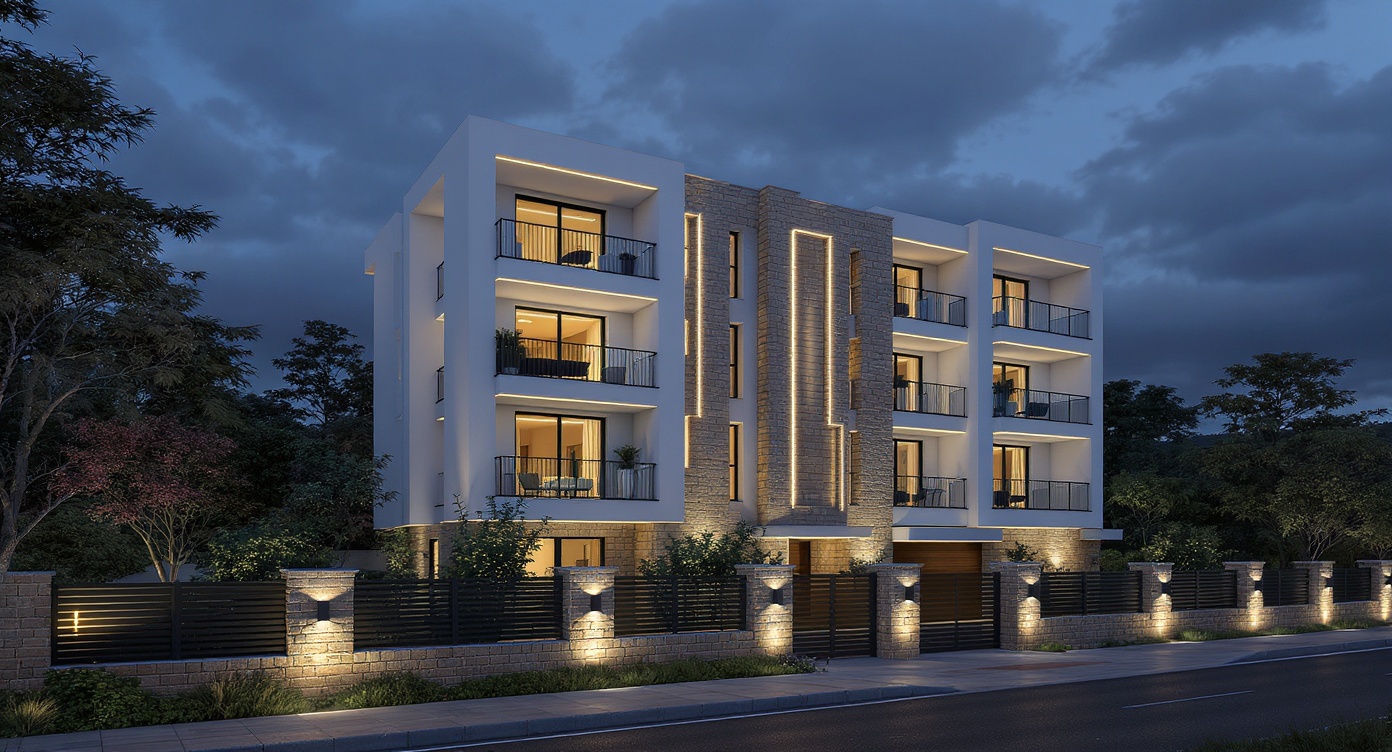
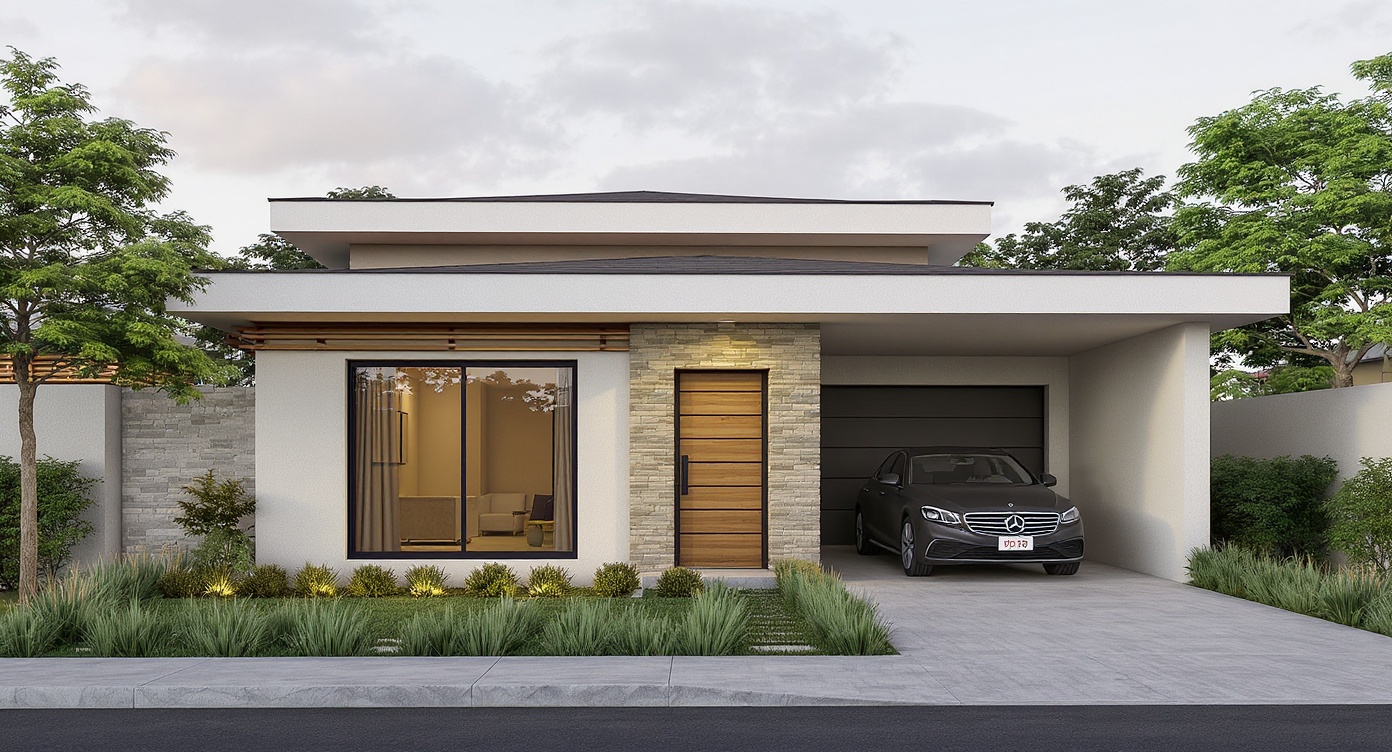
This render stages a compact modern composition that balances tectonic clarity with a warm nocturnal palette. The massing reads as interlocking volumes: a rectilinear stone-clad pavilion anchors the right, a wood-lined recessed terrace cuts beneath the upper brick volume, and a second-story balcony with glass balustrade mediates between them. The choice to combine matte face brick, textured stone cladding and horizontal wood paneling produces a layered tactile hierarchy: rough, horizontally coursed stone expresses permanence at ground plane, the brick pier provides vertical rhythm, and the warm timber soffit and cladding humanize the sheltered terrace.
Material shaders are executed with restraint. The polished paving and driveway possess a low-bevel specularity that captures the warm window glows and recessed downlights without appearing wet; reflections are soft, stretched across the stone joints to suggest a slightly honed finish. The brick is rendered with subtle displacement and occlusion in the mortar joints so light sketches its texture rather than obliterating it. Wood grain on the soffit and terrace ceiling is visible in oblique highlight, the satin finish catching the recessed downlights to emphasize the intended intimacy of the covered seating area. Glass railings provide almost invisible lateral containment—slight Fresnel and warm reflected bounces of interior light confirm their presence without interrupting sightlines to the sky and distant trees.
Lighting is the narrative device. Recessed ceiling downlights under the terrace and balcony produce pools of warm lumens that draw attention to seating and circulation while leaving peripheral landscaping in softer shadow. Exterior accent uplights wash the stone face in chiaroscuro, accentuating the cladding’s relief and creating a tactile chiaroscuro that reads in silhouette. Interior windows emit warm ambient glows that bleed into the terrace, offering depth and implying occupied domestic spaces beyond the facade. The overcast night sky mutes moonlight to a cool, diffuse fill so that highlights remain driven by the artificial sources; this keeps contrast controlled and preserves texture across materials.
Spatially, the composition invites the eye from the paved driveway foreground through the sheltered terrace to the elevated balcony and distant horizon. Soft cast shadows from the architecture and vegetation provide scale—low-angled shadow anchors the glazing and frames the entrance without harshness. The balcony seating area, subtly lit, becomes a secondary focal point: a transitional exterior room that benefits from clerestory-like under-eave lighting and the privacy afforded by the glass balustrade. Overall mood: domestic and contemplative, where material honesty and calibrated lighting combine to create a tactile, nocturnal domesticity rather than theatrical illumination.