Noon
Cloudy
City
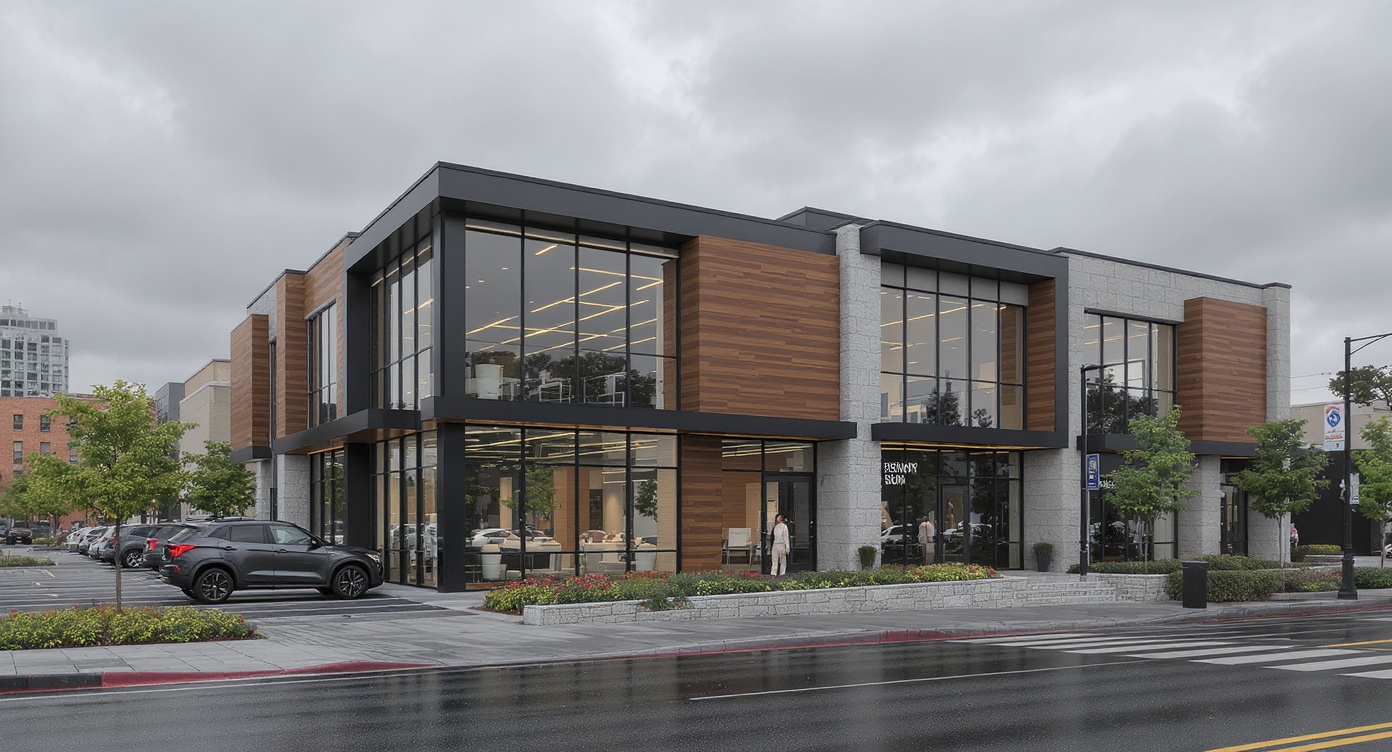
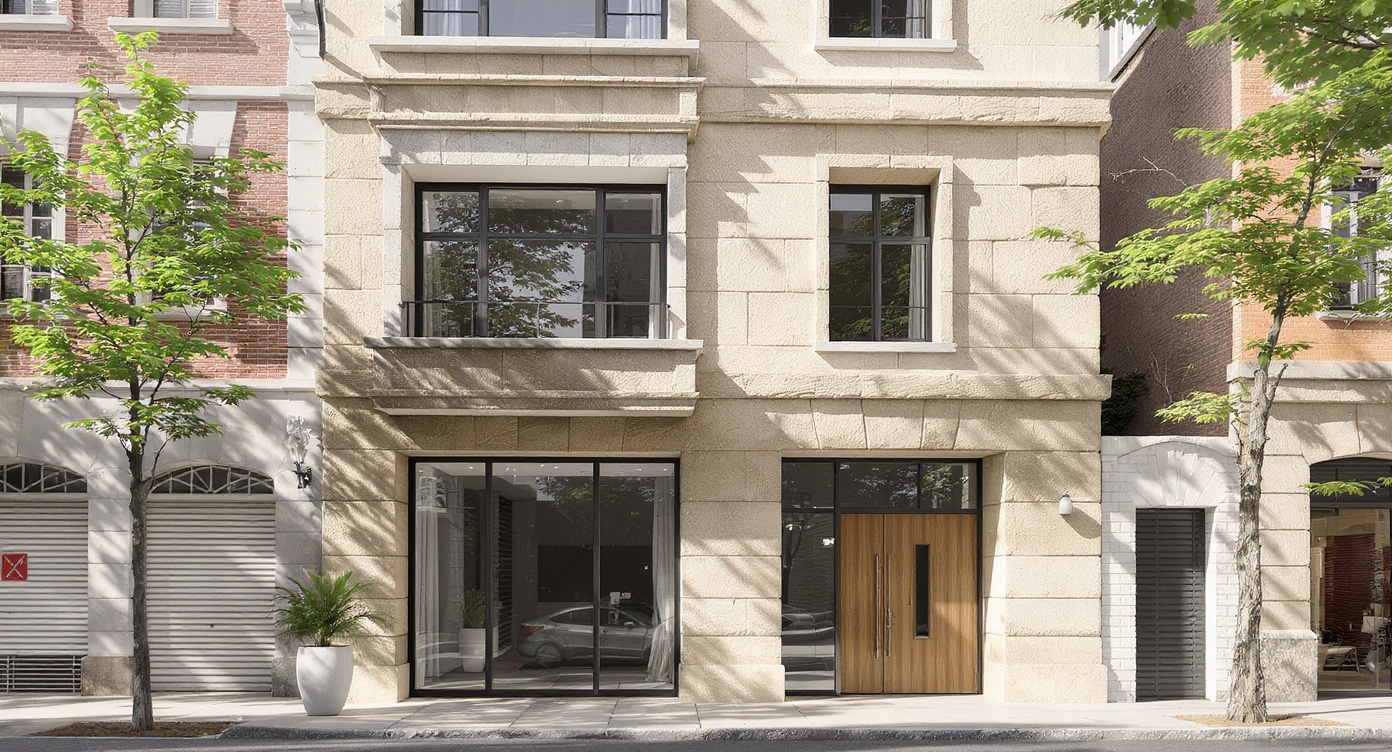
This high-resolution photorealistic 3d render showcases modern house exterior design through a narrow urban façade clad in textured beige stone and light travertine panels across three stacked levels. tall dark-framed windows, recessed balconies with horizontal stone bands, and a warm wooden entrance with full-height glazing create a refined contemporary look. rendered at noon under clear sunny conditions, the scene features sharp natural sunlight, soft realistic daytime shadows, and no artificial lighting, while a bright city backplate beyond the façade reinforces its urban context.
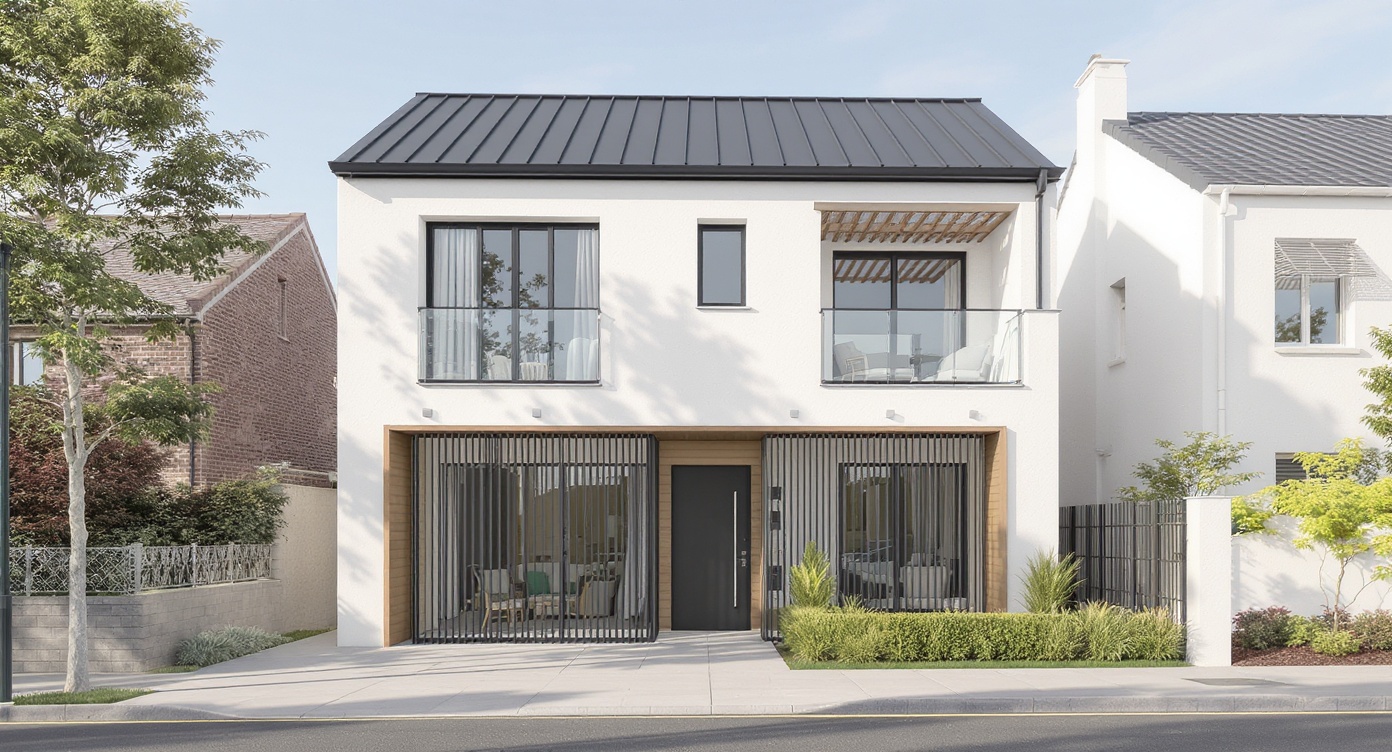
This high-resolution photorealistic 3d render presents a modern two-storey townhouse facade defined by ai house exterior design principles, featuring crisp white plaster walls, a dark metal roof, large multi-pane windows, and a recessed entrance screened by vertical black metal slats framed in warm wood. an upper balcony with a glass balustrade and wooden pergola adds architectural depth. the scene faithfully preserves the exact composition and surroundings of the original sketch — adjacent townhouses, sidewalk, street frontage, and the tree on the left — rendered in clear morning daylight with soft natural shadows and all artificial lighting left off for a clean, realistic exterior presentation.
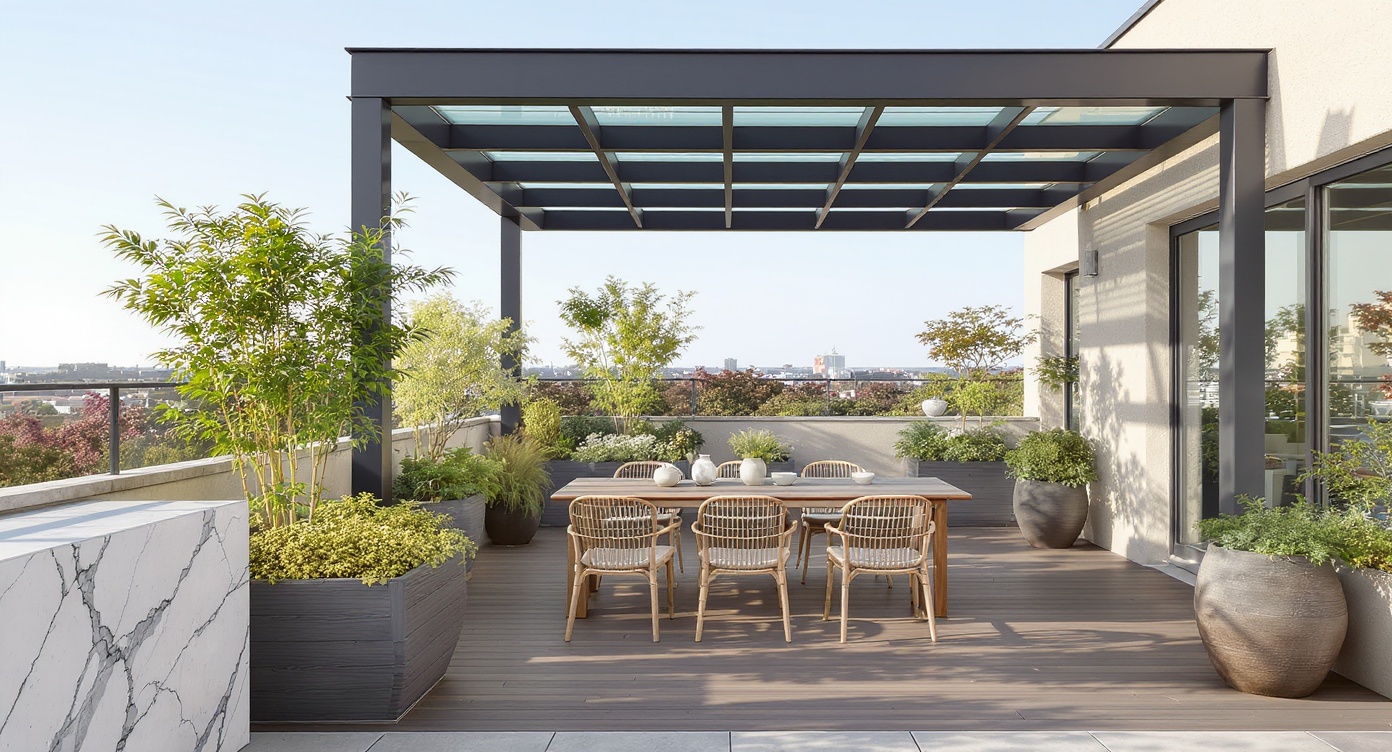
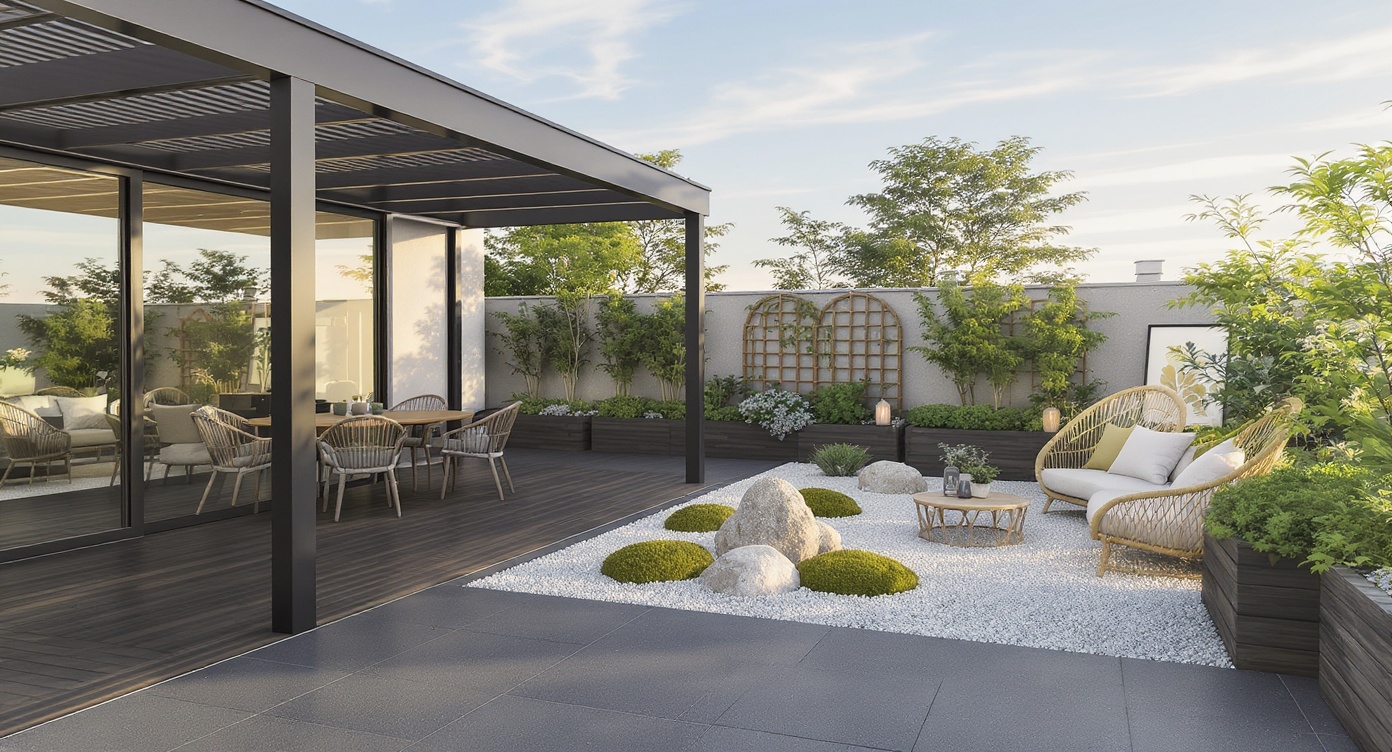
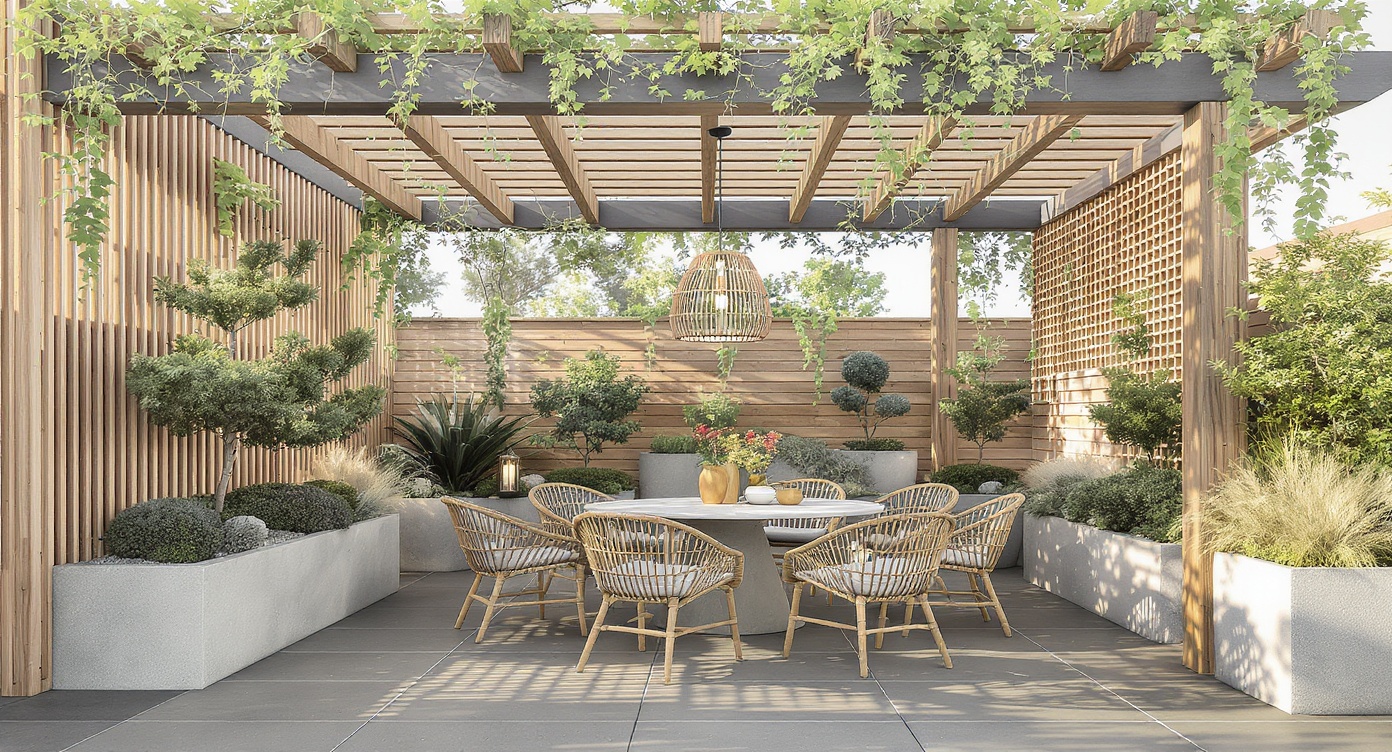
A high resolution photorealistic 3d render of a modern rooftop terrace with pergola and dining area
A high resolution photorealistic 3d render of a modern rooftop outdoor terrace with ambient lighting and detailed materials
This high-resolution photorealistic 3d rendering of a rooftop lounge depicts a modern outdoor space styled with natural materials, featuring a pergola-covered dining area and a cozy seating nook. textured woven rattan chairs surround a round dining table atop matte dark large-format floor tiles, while vertical wood slats, lattice trellis elements, concrete planters filled with lush greenery, a gravel zen garden with rocks and moss, and climbing vines on the pergola posts add depth and organic character. rendered in clear morning light with all artificial fixtures turned off, the scene captures soft directional sunlight, gentle shadows, and highly realistic material details—from wood grain and concrete texture to pebble variation and foliage translucency—while maintaining the exact surrounding environment and backplate from the sketch for a cohesive, naturally illuminated rooftop atmosphere.
This high-resolution photorealistic 3d render presents ai home exterior design in a modern single-story house with flat roofs, a walled front yard, and a covered carport with a parked car visible just as in the original sketch. large dark-framed sliding glass doors, horizontal wood-slat accents at the entrance, and textured grey stone-clad panels on both the façade and boundary wall are rendered with accurate materials including off-white stucco, warm wood, dark metal garage detailing, narrow grass strips, and subtle rooftop edging. the composition, environment, backplate, camera angle, and proportions are preserved exactly, while soft morning natural daylight provides gentle shadows and clear ambient illumination with all artificial lighting turned off.
3D Render AI that turns your models into stunning visuals with 100% accuracy.
Upload your designs now and see them come to life instantly.